
Real-time monitoring of electroplating current for TDK Croatia
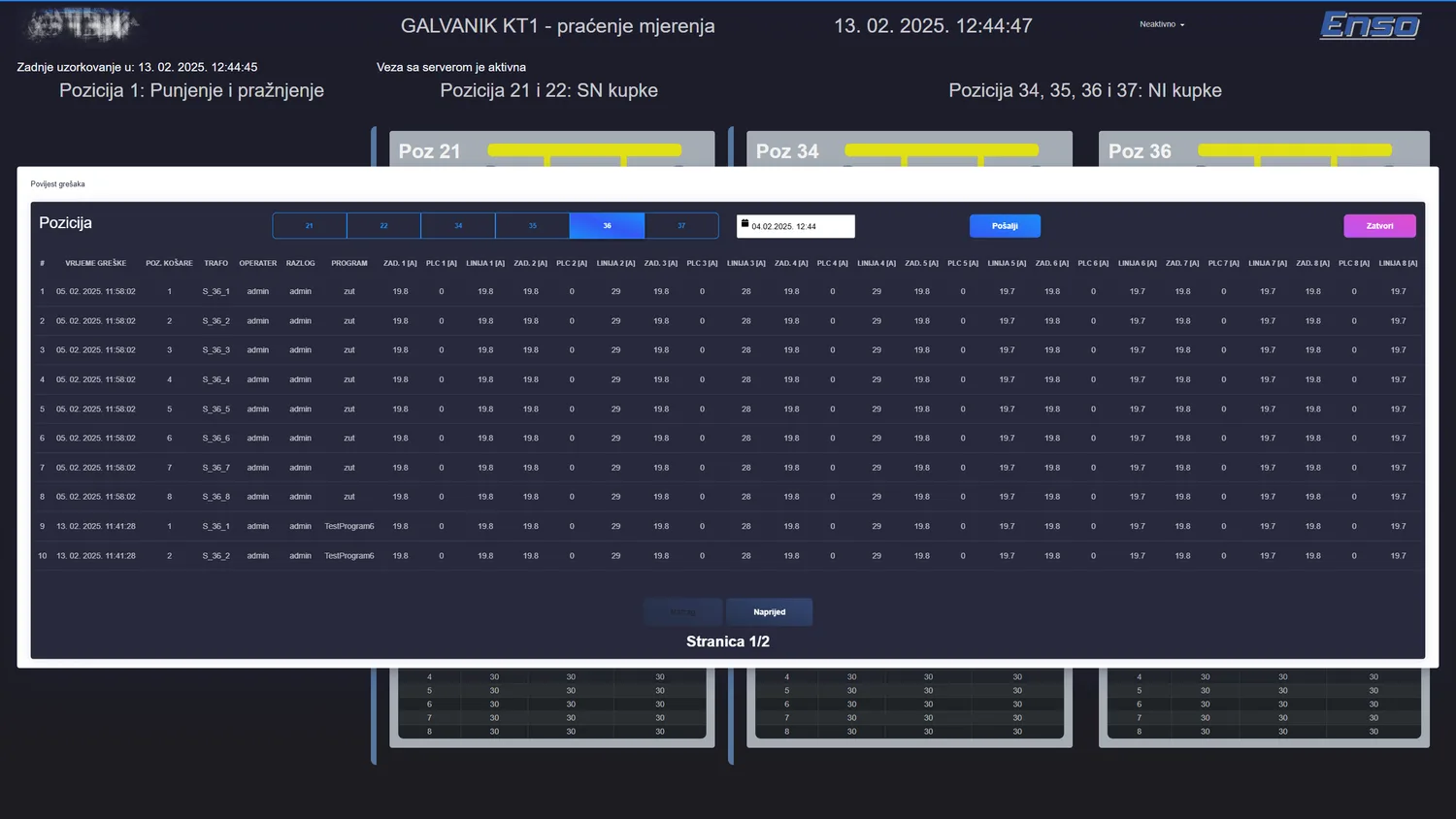
On the electroplating line, a fault in the tanks was only discovered once the process had finished. We developed a web SCADA application that reports a fault the moment it happens, instead of after it has ruined the next batch.

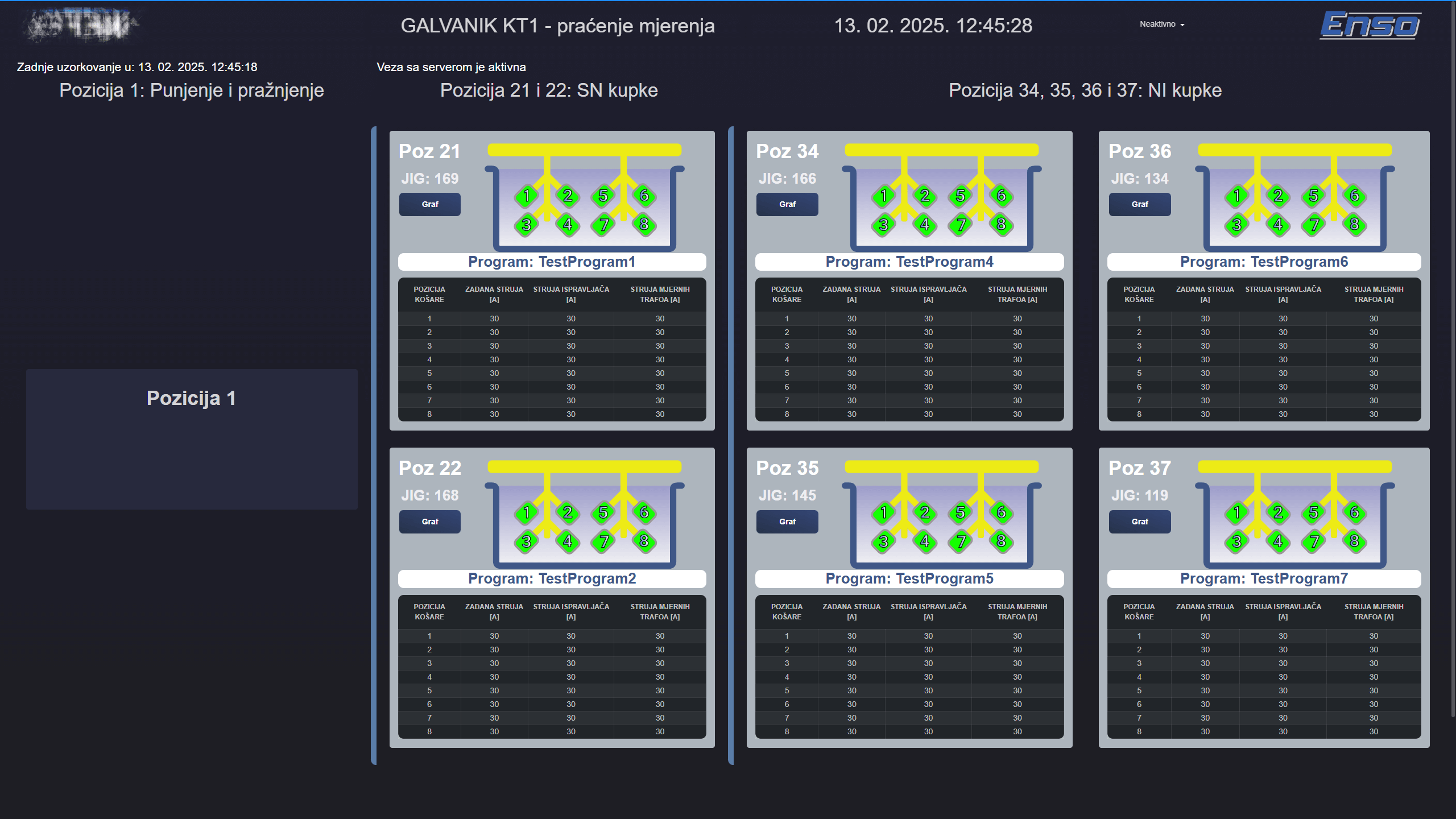
A tank fault was only discovered once the damage was done
On the electroplating line at TDK Croatia in Kutina there was a problem with detecting faults in the plating tanks - a fault was often detected only after the entire process had finished.
The client wanted the problem detected as soon as it occurs, so that the fault could be fixed immediately and prevented from recurring in the next plating batch, instead of unknowingly exposing incoming parts to a faulty tank.
Current transformers on every tank, processed in a web SCADA
Current transformers that measure the current as an analog signal were installed on every tank. The signal goes to the PLC, which processes the data and sends it to the database - from there the backend application processes it further, and the frontend serves it to the operator's screen.
The system is built on a real-time architecture: a React application serves as the central dashboard for operators, while the ASP.NET Core backend communicates with the PLC and combines a REST API for historical data with SignalR (WebSocket) for real-time data transfer, integrated with the client's existing database.
Timely fault detection instead of discovery after the damage
Gallery

Need monitoring and alarms for your production line?
Tell us about the process you want to monitor - our engineering team will propose a solution with no obligation.