
What does the manufacturing of special purpose machines include?
Mechanical Design

Mechanical elements are designed from the conceptual sketch. For reliability, system compatibility, and adherence to machine building standards, we select premium equipment from our partners:
- Welded structures – manufacturing of robust machine bases for maximum stability and safety
- ITEM – installation of modular aluminum profiles and connectors for quick and precise assembly
- IGUS – installation of energy chains for cable and hose protection in motion
- HIWIN – integration of linear technology: precise guides and carriages
- SMC, FESTO – integration of pneumatic cylinders, electric linear axes, rotary tables, and position sensors
- Končar, Siemens, Oriental motor, Nanotec – integration of drive motors for conveyor belts, rotary tables, and manipulators








3D CAD model design in SolidWorks includes:
- Advanced CAD design of elements, assemblies, and lines.
- Creation of digital twins of machines.
- Simulations of element movement and structural strength.
- Preparation of workshop documentation.
- Preparation of Bill of Materials – BOM.
Electrical Engineering

Electrical engineering begins with functionality analysis and equipment selection. We integrate premium equipment from renowned partners into our machines:
- Rittal, Schrack Technik – design and assembly of electrical cabinets
- Siemens, Schneider Electric – installation of fuses, motor protection circuit breakers for motors
- Siemens, Beckhoff – integration of PLCs and frequency converters
- Siemens, Schmersal – ensuring safety requirements by integrating safety relays
- Leuze, Baumer, IFM, FESTO, Sick – integration of optical, inductive, and other sensors into machines
- Sensopart, Cognex, Baumer – integration of vision systems with cameras








Designing electrical and fluid diagrams according to IEC standards for machine building in EPlan includes:
- Creation of main current and control diagrams for machines and devices
- Design of pneumatic and hydraulic circuits integrated with electrical diagrams.
- Graphical representation of PLC cards and I/O address assignments.
- Clear diagrams of BUS communication and network architecture.
- Generation of comprehensive reports: material lists, cable lists, terminal block plans, and labeling tags.

Machine Assembly

This is the most dynamic part of the entire process, as it is here that we see the machine “grow” and come to life. Everything we meticulously designed in previous phases is transformed into a finished product in this step. The process begins with procurement and ordering of equipment according to specifications, after which the focus shifts to our production hall.
Our workshop is strategically divided into specialized departments:
- Metalworking and Grinding: Here we cut aluminum profiles and weld robust structures that form the machine’s skeleton.
- In-house CNC machining: We have our own CNC machining center for producing precise parts, while for extremely large components, we collaborate with reliable external partners.
- Electrical Room: The place where electrical cabinets are assembled.
- Assembly Halls: Dedicated spaces for final machine assembly and a specific department for vibratory feeders.
After mechanical assembly and sensor installation, the crucial moment arrives – the machine’s activation. Our engineers start up the PLC and the machine’s HMI operator panel. The machine is then rigorously tested in our facility until the predicted performance is achieved, ensuring safety and reliability before delivery to the customer.
Machine Delivery

Machine delivery is a process of quality assurance and full compliance with the strictest industry requirements. Every ENSO machine is designed and manufactured in strict accordance with European standards and machinery directives, guaranteeing maximum safety and reliability. Through inherent design, we integrate safety into the very core of the machine as early as the design phase.
We place special emphasis on safety systems for protecting people and the environment. We implement advanced safety standards, including strict LOTO (Lock-Out, Tag-Out) and LOTOTO (Lock-Out, Tag-Out, Try-Out) procedures.
This approach allows us to meet all conditions for applying the CE mark to the machine, confirming that the machine has passed all risk assessment phases.
Before the machine leaves our facility, we conduct a FAT (Factory Acceptance Test) – factory testing in the presence of the customer. After installation at the customer’s location, a SAT (Site Acceptance Test) follows.
Each delivered machine comes with detailed documentation essential for proper operation and system longevity. It includes:
- Instructions for use and maintenance.
- Electrical diagrams, pneumatic and hydraulic diagrams for precise diagnostics.
- Drawings of non-standard (unique) parts so that the client has full control over spare parts.
- List of standard components and a proposal for spare parts procurement.
Our Solutions in Industry
ENSO has built various special purpose machines used in factories:
Portfolio of Delivered Machines
LINKO – Automated optical inspection of metal parts
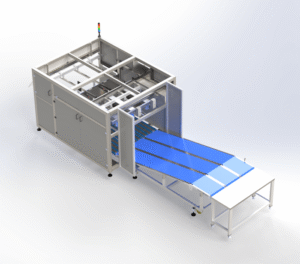
STACKER – Insulation stacking machine
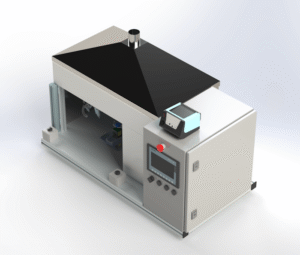
SOLMAC – Soldering station
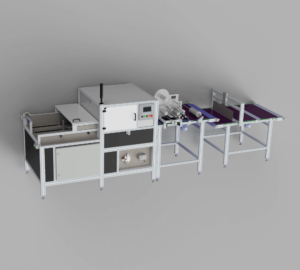
PANDE – Declaration marking machine
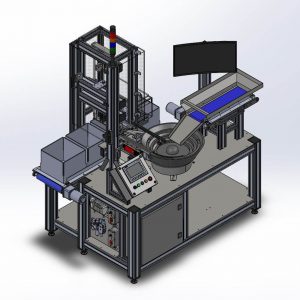
ZUBKO – Machine for optical inspection of the metal teeth elements
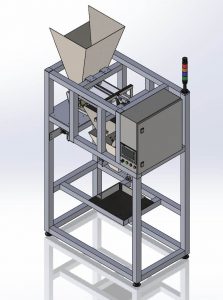
DOVA – Springs dosing machine
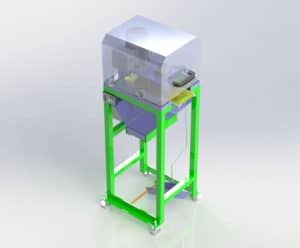
BRUS – Grinder
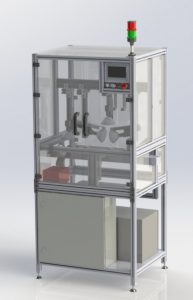
AOI Sklopka – Optical inspection machine
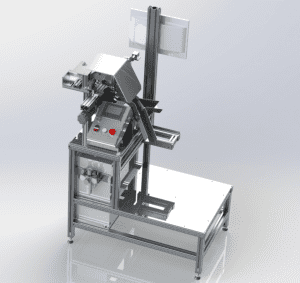
Krivulja – Optical control machine
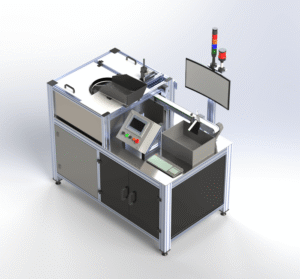
PRIKA – Housing marking machine
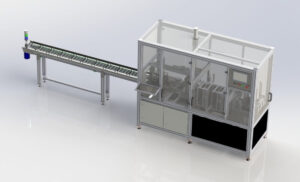
KOTRA – Electronic components ejector machine
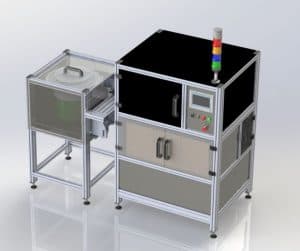
PLOK – Machine for orienting, optical control and packing plastic parts
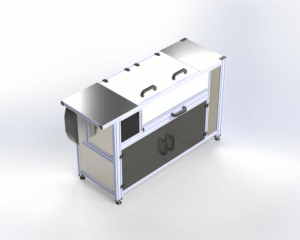
TUMIX – Mixer
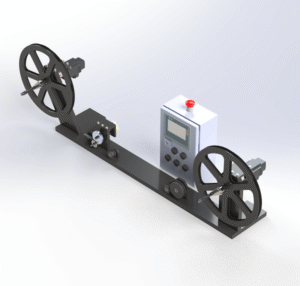
PREMKO – Rewinding machine
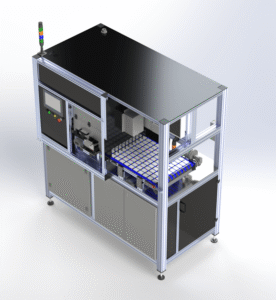
GLUSTA – automatic gluing station
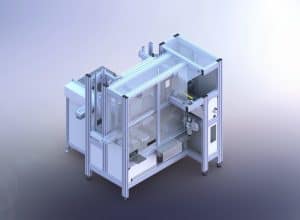
BRIZ – Electronic component packaging machine

KOMPA – Machine for orienting, optical and electrical measuring and packaging of electronic components
EPRI – Electronic component marking machine
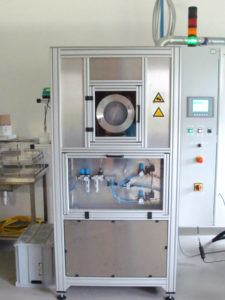
LAKI – Machine for electronic component passivation

SIPA & NASU – Line for automatic blowing drying and cooling
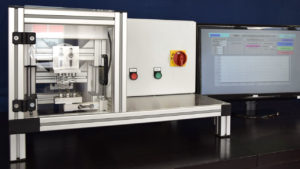
UMO – Device for the dynamic measurement of force
BURE – Machine for cleaning of fire grids
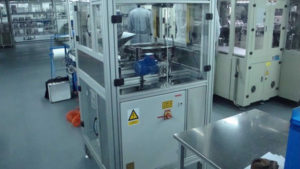
SIVI – Machine for positioning electronic components
